
A Juror and a Ladder
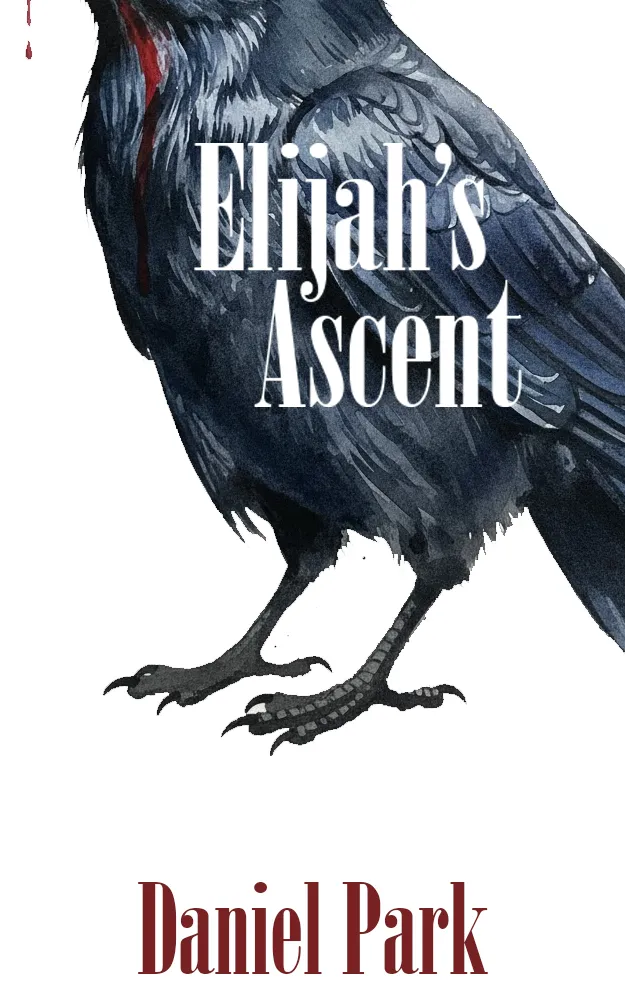
Once upon a time I entered a writing contest that rattled me so much that, even months later, I second-guess anything that I write. Even this.
The rules were simple: write a story in one thousand words based on three randomly drawn cards.
Initially, one might think that a thousand words is the perfect amount. Heck, (one might think) if I have the thirty-five dollar entrance fee and an afternoon, I can clack out a thousand words to earn myself an official submission to win a thousand buck-a-roonies!
I’m not (not) implying that these were my thoughts.
I was confident in my writing, and the budget that my family was living off of was spread pretty thin. Thin enough for me to consider stupidly sacrificing thirty-five dollars for a chance to win a thousand.
I didn’t win. I didn’t even make it past the first round (which reminds me of my 2025 Musicbed Challenge entry), but I still feel like my entry is worth a read.
I struggled with tenses. I pored over the words and learned the true meaning of “less is more” by chopping whole paragraphs from my story that built atmosphere but didn’t move the story a single inch. I sweat, and I swear to you that I didn’t (not) cry.
My three cards? The first card was for genre, and I pulled Thriller & Suspense. The second card was for a character. Mine was Juror. Finally, the third card was an object: Ladder.
Exactly 999 words later, I had written Elijah’s Ascent:
Elijah’s Ascent
The steel-blue ceiling of the world stretches in every direction.
Gerald Hicks lies in the grass, pondering the endless view. A much younger Gerald would have sussed out the shapes of puppies or dragons or ducks from the clouds in the sky. This crisp autumn morning, as Gerald finds himself in the August of his life, there’s nary a hint of fluff above him.
And so, instead, Gerald’s mind begins to wander. Because he’s certain that there’s not much left in store for him, he doesn’t take to thinking about the future. At times he is loath to think about the past, but he does this now.
His mind falls backward to a time in his life when his bladder didn’t wake him up in the middle of the night to piss, and his prostate didn’t inhibit the whole affair.
He vaguely registers the harsh peals of crows.
Gerald is thinking about the time he served on the jury that convicted Elijah Brooks for the abduction and murder of the Henderson baby. The murder happened in November of ‘11 and the trial happened in early ‘12. The sole reason Gerald is able to pin this timeframe down forty years later is because the Titanic sank in April of that year and everyone seemed to forget about Elijah Brooks after that.
Except Gerald.
Sometimes, at night, during his not-infrequent trips to the toilet when the world is quiet and still, he thinks about Brooks propping up the ladder against the Henderson’s house and climbing up to the second story. He imagines the window of the nursery sliding up. Brooks climbs in and crosses the room to the baby’s crib. In his mind, Gerald sees the rosy-cheeked child sleeping soundly as Brooks plucks it up and away, forever out of this world and into the next.
Because the trial was held in Red Oak, the seat of Montgomery County, Gerald had to travel to get to the courthouse. The trial was a formality, really. Gerald and the other jurors seemed to separately-but-together anticipate a short enough stay that their overnight bags were half-heartedly packed.
It was an open-and-shut case: Brooks, a stranger to everyone in Prairie Creek, travels door-to-door looking for work. In his horse-drawn wagon he has various tools of his trade, including a single twelve-foot ladder. He’s hired on by William Henderson to help paint the Henderson house, which they complete in two days’ time. A few nights later, the Henderson baby is found flayed open in a nearby copse of trees. Split from stem to stern she is, just like a deer. There are indentations on the nursery’s windowsill that match Brooks’s ladder.
Will Henderson rounded up a mob to hunt down Brooks. They found him over in Villisca fixing the handle of a well pump and hauled his ass back into town. With the Marshal present, they stood Elijah’s ladder up against the Henderson house to show just how well it could reach the ten-foot sill. All the while, Elijah Brooks watched on, trussed up like a hog in the back of his own wagon. Things would have gone differently had the Marshal not been Henderson’s brother-in-law. Gerald never mistook this display of due process as a respect for the law. He understood it as Henderson’s respect for family.
No one could fault William for tearfully pleading to the gathered crowd that Brooks be hanged.
Red Oaks’s sheriff made his grand entrance the next day to take over the investigation. When a hunting knife was found in Brooks’s kit with dried blood on the handle, his trial was fast-tracked to the front of the line. The town of Prairie Creek was ravenous.
As Gerald reflects from his place in the grass of his side yard, he remembers most how Brooks sweated in the courtroom that day: dark skin dripping fit to fill a bucket. His court-appointed lawyer’s defense was that any workman worth his salt would understand that it wouldn’t be safe to use a twelve-foot ladder to reach a ten-foot window.
Gerald, like the other white men that comprised Brooks’s jury of “peers”, had already made up his mind.
The death penalty was legal in Iowa in 1912. In fact, it’s still legal as Gerald contemplates the grouping of black birds that circle each other in the blue void above him. Back then, the method of death was hanging, and the judge and jury unanimously delivered William Henderson’s wishes for a death sentence well before supper time.
With his community service completed, Gerald had mostly lost track of what happened to Brooks. There must have been an appeal process and a review by the Governor, but Brooks was still hanged by the neck until he was dead on a hot June day, just as the news of the Titanic’s fate began to grow tepid.
This morning, Gerald was reminded by his wife, Gertrude, that one of their shutters was hanging askew. He, who thought of himself as an obedient husband and all-around good person, retrieved his own ladder–a twelve-footer, of course–from the shed, and found himself in a unique predicament as he gazed up at the shutter hanging crookedly off the second-story bathroom window.
Gerald was initially concerned about the steep angle of his ascent but determinedly climbed anyway.
After a short trip up and a long fall down, he finds himself splayed in the grass of his side yard.
He knew that climb would be precarious…always did, really. Now he realizes that it would have been impossible to descend while holding a baby.
One of the circling crows has now boldly perched atop his chest and stares him squarely in the eye, its head cocking–twitching–from one side to the next. Gerald cannot feel the weight of the bird, only that of its gaze.
Gerald cannot sense anything below his neck.
He lies there, only feeling the chilly breeze on the skin of his old-man’s face.
That is, until the bird strikes out for an eye.
Pingback: A Useless Superpower – palanark